“Creating change in the blink of an eye”
Next Course:
6 & 7 June 2026
9.30am-5pm
Additional online practice sessions (optional):
Wednesday 10 June 6.30-7.30pm
Sunday 14 June 10.30-11.30am
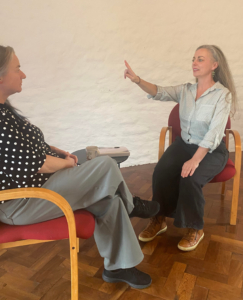
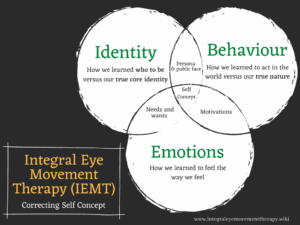
Developed by Andrew T. Austin, Integral Eye Movement Technique (previously Therapy) (IEMT) is a highly effective rapid change process that helps clients to process negative emotions and memories quickly. It is also used to support clients to integrate identity aspects, which may be causing internal conflict.
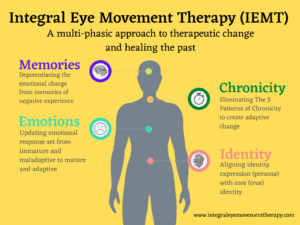
The 2 underlying questions we ask are:
- How has our client learned to feel this way? (Kinaesthetic)
- How has our client learned to be this way? (Identity)
On this interactive online course you will learn the 2 eye movement protocols for working with your clients.
The applications include working with clients who have PTSD using the Lynchpin model.
AND…
IEMT is more than a set of eye movement protocols that bring relief for clients – it highlights the patterns of chronicity that clients may be stuck in as a result of previous trauma.
On the course we introduce you to 5 main patterns of chronicity and teach you how to use IEMT to deal with each of them.
“Practitioners consistently report that IEMT has created change in their clients where no other approach has worked previously.” Andrew Austin – IEMT Developer.
Who is this course for?
There are 2 ways to participate in the course:
- Unaccredited – anyone can join the course and learn the protocols for their own benefit to use on themselves and with friends and family. IEMT is not suitable for everyone and if you choose this route you must have experienced IEMT yourself first.
- Accredited – for professionals who are working with people, including:
- NLP Practitioners
- Hypnotherapists
- Counsellors
- Psychotherapists
- Psychologists
- Mental Health Workers
- Trauma Informed Practitioners
- Somatic Practitioners
As a qualified teacher (PGCE), I use a range of teaching and learning styles including:
- Information sessions – I provide the presentation slides after the training to further support your learning.
- Pair work for practicing the protocols.
- IEMT Practitioner Manual.
As a trainee you will participate in the change processes yourself – this is an essential part of the learning process, and a great benefit of the course.
Content:
We cover a lot of material in the course, which means that we move quickly through the course content. I also arrange 2 online practice sessions which are optional. There is a closed FB group after the course for anyone who has further questions or would like to arrange practice sessions with other trainees.
Sessions include:
Practitioner Level – Creating Change
Part 1. Emotional Imprints – Updating our Way of Feeling with IEMT
- Introduction to the IEMT Structure
- Eye Movement and 3D Accessing Cues
- Introductory Exercise and Calibration of Representational Change
- The IEMT Kinaesthetic Pattern and Imprint Tracking
- Post Traumatic Stress Disorder and Time Coding
Part 2. Identity Imprints – Updating our Way of Being with IEMT
- Introduction to Structure of Identity using Pronouns
- Four Primary Identity References – I, Me, Self, You
- The IEMT Identity Pattern
- Patterns of Chronicity & Emotional Chaining
- Physiological State Accessing Cues
Requirements:
Accredited – You must have some experience in working 1 to 1 with clients/people. If you are unsure about this, please contact Tracy before booking your place. For certification you must complete 2 case studies and submit a 20-minute video of a session within 3 months of completing the course. To receive certification, you must register as an Associate member on the IEMT Association site (£72 per year).
Full information: https://integraleyemovementtherapy.com/certification-criteria/
Cost:
Accredited – £400
This includes the assessment of your Case Sudies, with up to 1 re-submission for corrections.
Further submissions and mentoring can be arranged directly with Tracy.